
Richard Mole Talk 17 11 2025

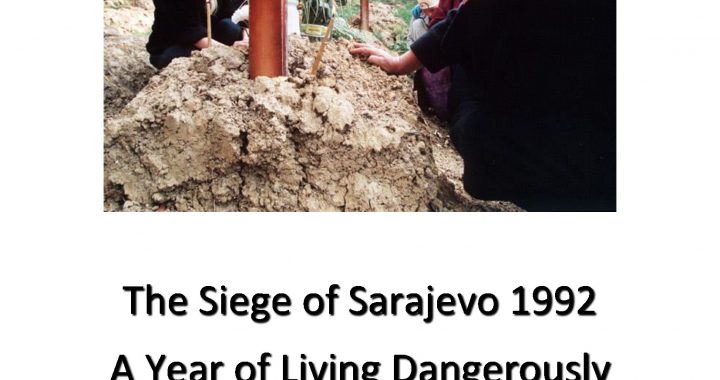
Nov-17 Richard Mole A Year Living Dangerously the Siege of Sarajevo
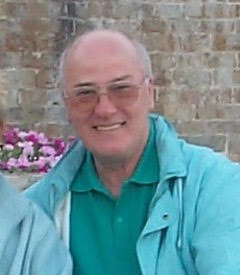
Background – Richard Mole
His background and expertise lies in the field of logistics and transport management. He was commissioned from the Royal Military Academy Sandhurst in 1971 into the Royal Corps of Transport. His 25-year career in transport and movements included an in-service Geography scholarship degree BA (Hons) at Durham, including many disciplines. His command appointments ranged from combat supplies for a Division, Transport Coordinating Officer for a Squadron in support of a Division, Squadron Commander of the single bulk fuels unit in support of 1 (British) Corps, and Chief of Staff of a Transport Group in BAOR. He was a Member of the Institute of Petroleum whilst serving. His staff appointments included trials co-ordinator at the Joint Air Transport Establishment, RAF Brize Norton, staff officer (policy) for Director General Transport and Movements (Logistic Executive Army), Project Officer Department of National Defence, Canada (for Director General Transportation).
Richard served two operational tours in Northern Ireland in the 1970s, and one operational tour with the United Nations in the Former Republic of Yugoslavia (FRY) in 1992. In the latter he was a UN Military Observer in Sector East, then Operations Officer for the UNMO Group covering the complete theatre of operations. This meant travelling to all areas of FRY.

Finally, he was Senior Military Observer in Sector Sarajevo in 1992 during the intense siege of that city. He was awarded the Force Commander’s Commendation “in recognition of his exemplary performance and contribution to peacekeeping beyond the normal scope of his UNPROFOR duties”.

He retired from Military Service in 1993
In 2010 he became Project Manager for the re-development of Driffield Methodist Church, a £2m project. He found all the funds through grants and donations, upgraded the Schoolroom (£146k) and then saw the demolition and rebuild of the main building.
He continues his main interest in antiques and picture framing.
#########################################################

Angus Townley Talk 19 05 2025

May-19 Angus Townley Crowle Peatland Railway
The railway website is https://peatland.co.uk/
The talk will look at the history of peat extraction on Crowle & Thorne Moors and the development of the railways that took peat from the moors from their beginnings at the end of the 19th century to the development of Crowle Peatland Railway.
#########################################################

David Skillen Talk 17 03 2025

Mar-17 David Skillen Five years in 50 minutes a general introduction to the American Civil War

The American Civil War is viewed as the most significant event in the country’s history. But why did the United States and the Confederate States go to war? In this talk David will explore why and how the American Civil war was fought. Along the way we will visit Bull Run, Gettysburg and Antietam (illustrated with photographs taken by him on these battlefields), meet such legends as Abraham Lincoln, Jefferson Davies and Robert E. Lee and learn how the war produced the United States we know today.
#########################################################

Keith Hanson Talk 17 02 2025

Feb-17 Keith Hanson Tales of the Tower.

Feb 17 

A former soldier of some 30 years, Keith became a Yeoman Warder at the Tower of London in 1997. He later gained promotion to become the Chief Exhibitor, primarily responsible for the safety, security and presentation of the Crown Jewels. Also during this tie Keith served as a member of the Queen’s Bodyguard of the Yeoman of the Guard.
In 2020 Keith was awarded the Royal Victoria Medal for his service to the Crown.

Tales of the Tower.

###############################################################

Eric Jackson Talk 03 02 2025

Feb-03 Eric Jackson

Feb 03 rime & Punishment, from Anglo Saxons to present day.

A journey through crime and punishment from the time of Alfred the Great up to the present day. What crimes were committed in Saxon England and how were they dealt with, the development of the jury system to replace trial by ordeal or combat. Punishments of old, the arrival of the Normans, some typical cases from the middle ages and later 18th century. The establishment of the Quarter Sessions and Assizes, the introduction of prison as the principal means of punishment. Capital punishment and its abolition. Well illustrated with over forty PowerPoint slides, and some thought-provoking statistics at the end.

###############################################################